REVIEW · QUEENSTOWN
Queenstown: Tandem Paragliding Experience
Book on GetYourGuide →Operated by Skytrek Tandem Hang Gliding & Paragliding · Bookable on GetYourGuide
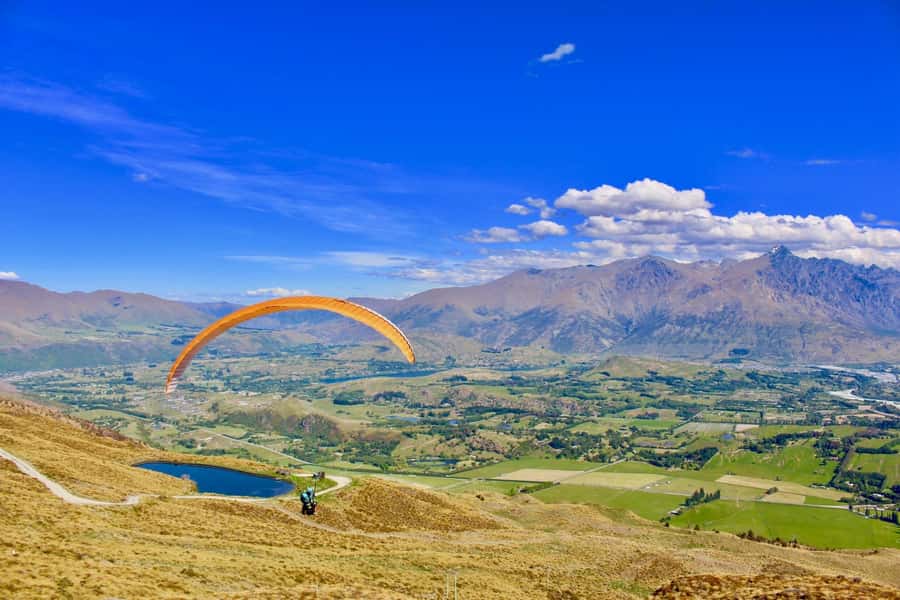
The view starts before you even fly. Coronet Peak launches you into tandem paragliding over Queenstown’s Wakatipu Valley, guided by highly experienced pilots. It’s built for first-timers, with a setup that keeps things calm and organized.
I love the smooth take-off and landing focus. That matters here because you’re not just chasing adrenaline—you’re aiming for a safe, comfortable ride in real mountain conditions. I also really like the pilot-led experience style, from gentle check-ins during flight to the option to go more relaxed or ask for a few tricks, with pilots such as Tugi, Andrea, Jayden, Tai, and John specifically mentioned by guests.
One consideration: this is weather-dependent. If wind and conditions aren’t right, your flight may be moved or refunded, so don’t stack your schedule too tightly on your chosen day.
In This Review
- Key things to know before you go
- Coronet Peak paragliding: why Queenstown feels different in the air
- The 45 Camp Street start and the short van transfer that keeps it moving
- Coronet Peak safety briefing: what you’re really being taught
- Flying over the Wakatipu Valley: the part you’ll remember
- The ride style: smooth takeoff, smooth landing, and why it matters
- How the timing actually plays out: a 90-minute window that feels efficient
- Guides and pilot experience: the human factor in tandem flights
- Photos and videos: plan for the add-on if you want the keepsake
- Price and value: is $208 for Queenstown paragliding a good deal?
- Who this is best for (and who should think twice)
- Should you book Skytrek tandem paragliding in Queenstown?
- FAQ
- Where is the meeting point?
- How long does the experience take?
- Is prior paragliding experience required?
- Are photos and videos included?
- What about transfers to the launch area?
- What language are instructions given in?
- Who can participate, and who can’t?
- What happens if the weather is poor?
Key things to know before you go
- New Zealand’s highest commercial take-off point: You’ll launch from Coronet Peak, which gives the whole experience extra gravity (literally).
- Wind and route planning: Your pilot reads the thermals and wind line, which can mean a little more lift and time in the air.
- Small group feel: Max 7 travellers, so you’re not stuck waiting around in a crowd.
- Smooth motion is the goal: Multiple pilots are praised for controlled departures and landings, which helps if you’re nervous.
- Add-on photo/video is separate: Photos and video cost extra, and it’s worth deciding in advance if you want that upgrade.
Coronet Peak paragliding: why Queenstown feels different in the air
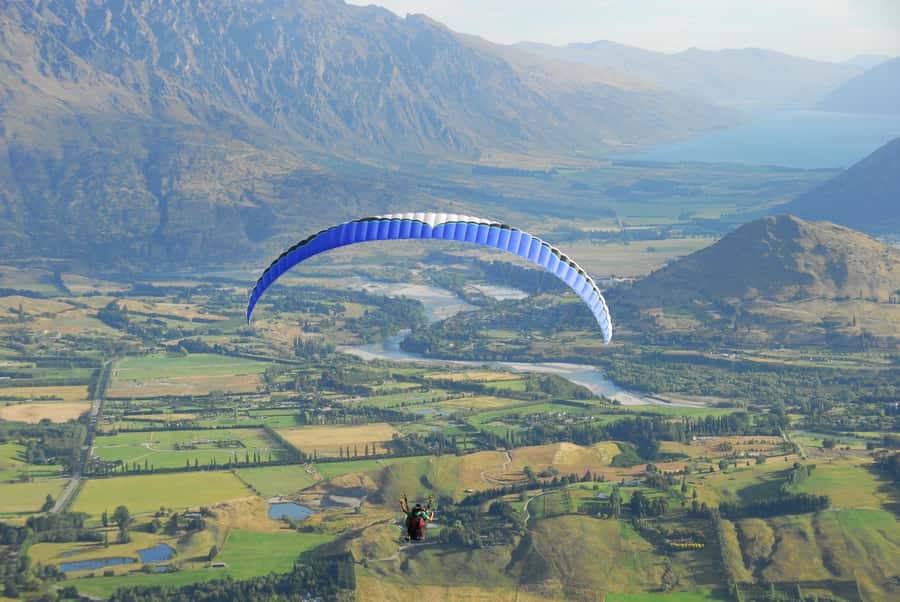
Queenstown is already a wow destination from the ground. From the air, it becomes a map you can feel—mountains under you, valleys opening up, and wind doing its quiet work above everything. This tandem paragliding experience is all about that: you’re carried by a pilot, but you still get the real sensation of free flight, with the view as the main event.
What makes this option especially appealing for most visitors is that it’s designed for first-time flyers. You don’t need training on harnesses or wing control. Your job is basically to show up, listen at the safety briefing, and trust your pilot to guide the flight path.
Also, the departure point is a big deal. Launching from a high commercial take-off gives you a head start on that “I can’t believe I’m up here” feeling, and it helps explain why the flights are consistently described as smooth rather than chaotic.
You can also read our reviews of more tours and experiences in Queenstown.


The 45 Camp Street start and the short van transfer that keeps it moving
The day’s rhythm is simple: you check in at Skytrek’s desk at the Ziptrek Shop, then you’re transported to the launch area. Your starting point is 45 Camp Street, and the transfer to Coronet Peak is about 20 minutes each way.
That transfer matters more than people think. Queenstown traffic can be unpredictable, especially if you’re basing yourself in town. The good news is the experience is built around a timed flow—check in, van up, briefing, flight, van back—so you spend less time hanging around and more time staring at the view.
One practical detail from the real-world experience: some guests mention they were able to board a shuttle bus from farther out areas like Arthurs Point rather than driving into central Queenstown. If you’re staying slightly outside town, it’s worth asking Skytrek beforehand what pickup options are available for your location.
Coronet Peak safety briefing: what you’re really being taught
At Coronet Peak, you’ll get a 20-minute safety briefing before anything happens in the air. This isn’t there to be dramatic. It’s there to set you up with the basics so your body knows what to do when the wing fills and you launch.
From the way guests describe the process, pilots take comfort and communication seriously. People mention constant check-ins during the flight, and that the briefing helped calm nerves. If you’re the type who worries about motion or sudden moments, this is one of the reasons tandem paragliding works well: your pilot handles the complex decisions, while you get clear, human guidance.
This is also where the experience filters out the wrong medical situations. The experience isn’t suitable if you have heart problems or other serious medical conditions, and there’s a weight limit of 264 lbs / 120 kg. If you’re on the edge weight-wise, check before you book.
Flying over the Wakatipu Valley: the part you’ll remember
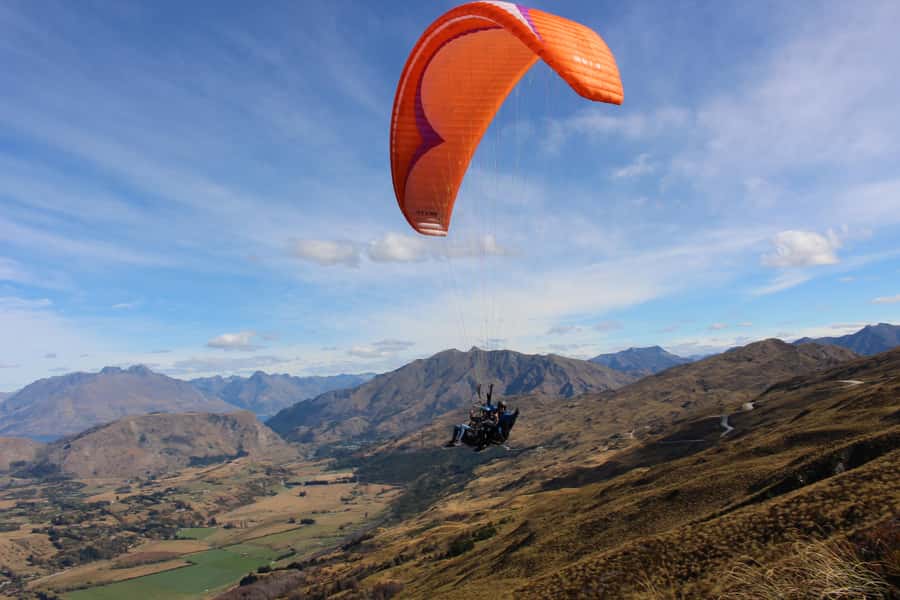
The core of the experience is your guided flight from Coronet Peak. You’re tandem with your pilot, so you’re not steering a glider wing yourself. Instead, you’re along for what matters most: speed felt through wind, the lift of rising air, and the wide-angle view of the Wakatipu Valley and surrounding mountains.
A few details that help you set expectations:
- It’s not a downtown overflight. One guest notes you fly further inland rather than directly over central Queenstown and the lake. You still get strong mountains-and-valley views, just not the exact postcard angle some people imagine.
- Your pilot may offer an intensity choice. Some guests describe being able to choose a calmer ride or ask for tricks in the air. That’s a great option if you want the thrill but you still want control over how wild it gets.
- Weather timing affects flight character. On days with thermal wind support, guests report getting a slightly longer, more lift-friendly flight. If the wind is working with your route, the whole experience feels easier and more scenic.
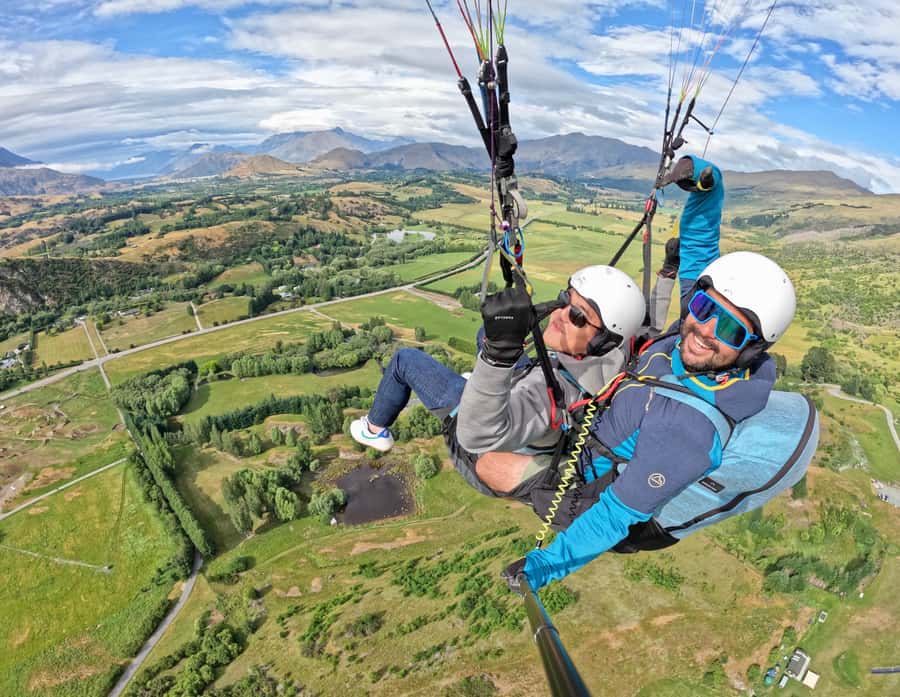
And the little physical sensations are part of the appeal. You’ll feel wind in your hair, and the ride can feel both free and oddly calm at the same time—like the adrenaline is present, but the pilot’s control keeps you from feeling overwhelmed.
The ride style: smooth takeoff, smooth landing, and why it matters
A lot of adventure activities get attention for intensity. Here, guests repeatedly praise something else: control.
Multiple reviews highlight that the take-off and landing are smooth, not abrupt. One guest specifically mentioned that landing didn’t involve the kind of hard braking they’ve heard about from other operators. Another guest noted that their pilot did a great job explaining the plan beforehand, which can matter if you’re sensitive to motion or you get nervous when you don’t know what’s coming.
There’s also a comfort tip that’s easy to miss: even in summer, people suggest bringing fingerless gloves. Coronet Peak can still feel chilly once you’re in open-air wind, and a thin layer can make you enjoy the moment instead of thinking about your hands.


How the timing actually plays out: a 90-minute window that feels efficient
This experience is 90 minutes total. That sounds tight, but the structure is what makes it work.
You’re looking at:
- time for van transfer to Coronet Peak
- a 20-minute safety briefing
- a guided portion once you’re set up
Then you’re back in the van and dropped off at the start point. Guests often describe the process as efficient and low-stress. That matters in Queenstown because you’re usually juggling multiple activities, and you don’t want to waste half your day waiting for a slot.
Also, group size is capped at 7 travellers. That keeps the experience from feeling like a production line. You’re not fighting for attention or trying to figure out where to go in a crowd.
Guides and pilot experience: the human factor in tandem flights
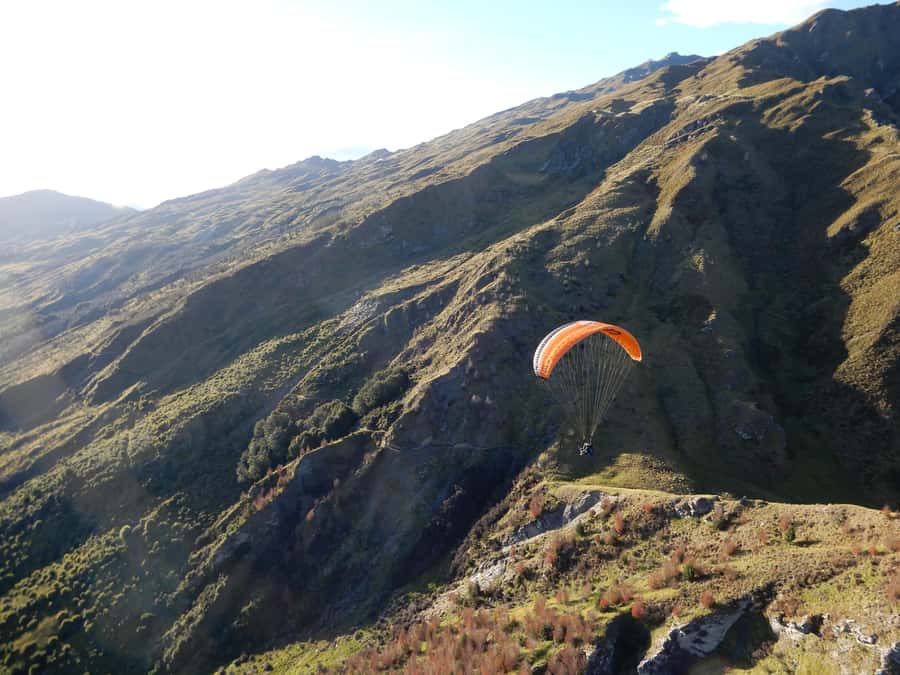
In tandem paragliding, the pilot is everything. You’re not just relying on gear; you’re relying on a person’s instincts and communication.
The names that come up again and again include:
- Andrea and Jayden (praised for being friendly and experienced)
- Tugi (praised for making it enjoyable and memorable)
- Tai (praised for humor and for calculating a better wind route)
- John (praised for communicating well and helping some guests avoid feeling motion sickness)
- Mona and Andres (praised for clear guidance and a reassuring vibe)
- Omar and Burak (praised for professionalism and communication)
If you’re wondering whether you can relax, these comments are a strong signal that pilots aren’t just flying—they’re actively managing comfort. Constant checks, simple explanations, and controlled handling show up repeatedly.
Photos and videos: plan for the add-on if you want the keepsake
The experience itself includes the flight and the pilot guide, but photos and videos are not included. You can add them later if you want that souvenir.
Guests who upgraded described the photos as well worth it, especially for the views. One person notes photos/video were an extra 90 NZD, which gives you a real benchmark for budgeting. If you want proof of flight but you’re watching costs, decide quickly—because the add-on is an easy way to turn a great memory into something you can share.
Price and value: is $208 for Queenstown paragliding a good deal?
At $208 per person for a 90-minute, tandem guided flight with transfers, you’re paying for a few things at once:
- trained pilot service
- time spent on safety briefing and setup
- transport up to Coronet Peak and back
That price also makes sense because you’re launching from a prime high take-off point and spending your time in the air rather than in long waiting loops.
Where value becomes personal is what you care about most:
- If you want the best views with minimal effort and no prior training, this is a strong choice.
- If you want a photos-and-video souvenir, factor in that extra cost.
- If your schedule is flexible, you’ll be happier with the weather reality, since this activity needs good conditions.
Net: for Queenstown, it’s a premium adventure, but the smooth process and pilot quality are exactly what you’re paying for.
Who this is best for (and who should think twice)
This paragliding experience is a good match if you:
- want a first-time activity with no prior experience required
- like guided adventure where the pilot handles the hard parts
- want adrenaline plus a calmer feel compared with more intense options
- want big mountain-and-valley views in a short window
It may not be the right fit if you:
- have heart problems or serious medical conditions
- weigh over 264 lbs / 120 kg
- are planning to bring very young children (it’s not suitable for children under 4)
If you’re motion-sensitive, you might still do well—some guests specifically praised pilots for helping avoid nausea. Still, bring your own comfort habits. Dress warmly for the wind, and don’t assume summer temperatures will feel the same in the air.
Should you book Skytrek tandem paragliding in Queenstown?
Yes—if you want one of Queenstown’s most memorable views with a guided setup built for comfort and first-timers. I’d book this when:
- your schedule has a little cushion for weather changes
- you want a smooth, controlled flight rather than a chaotic ride
- you’re willing to pay for an expert pilot and the high launch point
I’d think twice if you’re looking for something purely budget-first, because the photos/video add-on can add cost. And if you’re very worried about being inland from the main lake and downtown angles, adjust your mental picture: you’ll still see mountains and valley views, just from a route that isn’t directly over the city core.
If you’re ready for a high, airy experience with the kind of pilot attention that shows up in the details, this is a solid Queenstown pick.
FAQ
Where is the meeting point?
You meet at the Skytrek Desk inside the ground floor Ziptrek Shop.
How long does the experience take?
The total duration is 90 minutes, depending on the starting time you select.
Is prior paragliding experience required?
No experience is necessary. You fly tandem with an experienced pilot.
Are photos and videos included?
No. Photos and videos are not included.
What about transfers to the launch area?
Transfers to Coronet Peak are included, and you’ll be taken up and then brought back to the starting area.
What language are instructions given in?
Instruction is in English.
Who can participate, and who can’t?
The experience isn’t suitable for children under 4 and people over 264 lbs (120 kg). It also isn’t suitable for those with heart problems or other serious medical conditions.
What happens if the weather is poor?
This activity requires good weather. If it’s cancelled due to poor weather, you’ll be offered a different date or a full refund.
If you tell me your travel month and where you’re staying (central Queenstown or farther out), I can suggest the best way to time this with nearby activities.