REVIEW · QUEENSTOWN
Queenstown: 2.5 Hour Flight to Fiordland’s Iconic Locations
Book on GetYourGuide →Operated by Heliworks Queenstown · Bookable on GetYourGuide
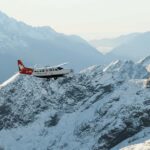
Queenstown turns into a front-row seat for Fiordland. In one 2.5-hour helicopter flight, you can scan Milford Sound from the sky and touch down at places most people only see in photos. I especially like the mix of big views and real, hands-on time on the ground at Lake Quill and the Earnslaw Burn basin.
The main thing to keep in mind is that this is weather-dependent. If conditions aren’t cooperating, routes and landing spots can shift—so you’re paying for access, but you need a little flexibility on the day.
In This Review
- Key Takeaways Before You Go
- Fiordland’s Big Names, All in One Helicopter Shot
- From Queenstown’s 64 Grant Road: How the Day Flows
- Weather Is Part of the Experience: Plan Like a Local
- Lake Quill and Sutherland Falls: Alpine Landing Moments
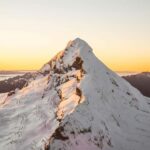
- Tutoko Glacier and Mt Tutoko: The Highest-Peak Feeling
- Milford Sound and Mitre Peak: Flyover Views You’ll Rewatch
- Earnslaw Burn Basin: The Only Permitted Landing
- Winter note: less waterfall, more snow coverage
- The Small Details That Make a Big Difference
- Price and Value: What $1,010 Buys You Here
- Who This Helihike (From the Air) Fits Best
- Should You Book This Fiordland Helicopter Flight?
- FAQ
- How long is the helicopter flight from Queenstown?
- What landings are included on this experience?
- Do they fly over Milford Sound and Mitre Peak?
- How many people are onboard the helicopter?
- Is hotel pickup included?
- Is food included?
Key Takeaways Before You Go
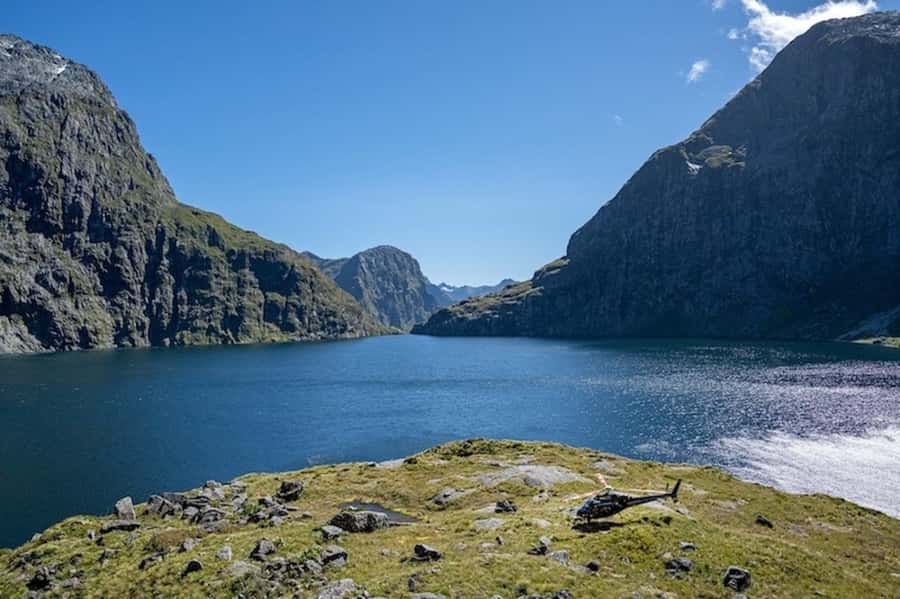
- Three landings: an alpine lake, a glacier, and the Earnslaw Burn valley basin.
- Milford Sound from above: includes flyovers of Milford Sound and Mitre Peak for maximum photo angles.
- Sutherland Falls scale: Lake Quill feeds the famous 580m/1,900 ft Sutherland Falls.
- Earnslaw Burn is special: the flight includes the only landing at Earnslaw Burn that the operator is permitted to do.
- Winter changes the waterfalls: June–August can mean less active waterfalls, but strong snow coverage and valley views.
Fiordland’s Big Names, All in One Helicopter Shot
Fiordland is famous for a reason: tight valleys, steep walls, and waterfalls that look like they’re pouring straight off the mountains. The kicker is that most of it is hard to reach and even harder to see all at once. This flight solves the time problem by stringing together key sights into a single route, starting from Queenstown and working outward across fjords, peaks, and glacial country.
What I like is that you don’t just “see” Fiordland—you get multiple angles and multiple types of terrain. You’ll get high-altitude views of the fjords and mountains, then trade that for short landings where you can stand on the ground near alpine water and ice fields. That combo is where the experience feels different from a standard sightseeing day.
You can also read our reviews of more tours and experiences in Queenstown.
From Queenstown’s 64 Grant Road: How the Day Flows
You meet at 64 Grant Road in Queenstown. From there, the flight heads out over key parts of the region, then returns the same way. If you choose hotel pickup and dropoff, that’s an easy convenience point, but it’s listed as optional—so plan around where you’re starting.
This is a shared flight with about 6 to 9 passengers onboard. Shared means you’ll be with other people, but it also usually means the tour keeps moving without dragging into a long day. It’s also a good size for getting comfortable in a small aircraft: you don’t feel lost in a huge group.
One practical detail that matters: seats are assigned by weight and balance requirements, so you can’t pick your exact seat. Also, you’ll need accurate individual weights at booking time. If your weight is off by a lot, it can lead to changes to the flight manifest or additional charges. That’s not small-print fluff—on a helicopter, weight and balance is operational.
Weather Is Part of the Experience: Plan Like a Local
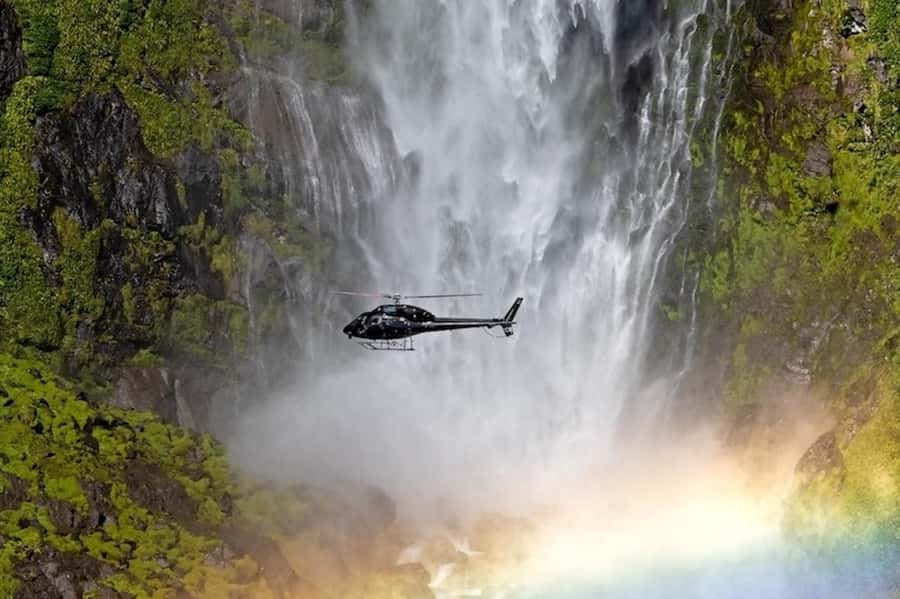
This tour lives and dies by weather. You’re flying above mountain systems and along fjords, and the pilot may adjust routes and landing locations for safety. That’s why the experience is described as weather-dependent.
Here’s how I’d think about it: you’re not just buying “a flight.” You’re buying a set of possibilities—multiple landing environments and major viewpoints—where the pilot is the one who decides what’s safest and most workable on the day. On a clear day, it can feel unreal. On a worse day, the value shifts toward the views you can still get from the air.
Lake Quill and Sutherland Falls: Alpine Landing Moments
The flight includes a landing at Lake Quill, an alpine-lake area that ties directly to one of Fiordland’s most dramatic water sources: Sutherland Falls, which is 580m (1,900 ft) high. Even if you’ve seen the falls in pictures, landing nearby is a different kind of experience because you’re standing closer to the scale and the terrain shape that makes the water so powerful.
This stop is short—think about grabbing photos, taking in the sound and mist, and soaking up the fact that you’re looking at a system that feeds one of the tallest waterfalls in the region. If you love photography, this is a time to move fast but not panicked. Put your camera where you can grab it instantly after the landing, and be ready for quick lighting changes since helicopters can hop between cloud and bright air.
Also, keep your expectations flexible. If conditions aren’t perfect, your pilot may adjust how the landing works. But when it goes as planned, an alpine lake landing turns the whole trip from “viewing” into “being there.”
Tutoko Glacier and Mt Tutoko: The Highest-Peak Feeling
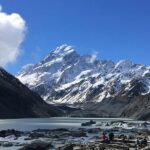
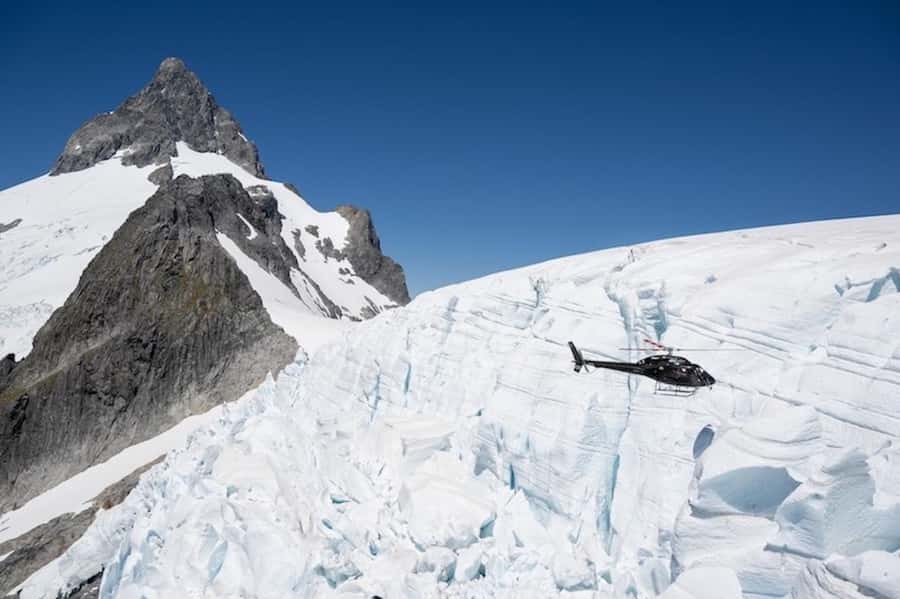
Next comes the glacier side of the story: Tutoko Glacier and the area around Mt Tutoko. This is one of the most dramatic parts of the route because the terrain shifts from fjord-world into high-alpine ice-and-stone geography.
The most important thing to understand is that a glacier landing isn’t just a sightseeing stop. It changes the texture of what you’re seeing: you get that cold, angular look of ice, and a sense of space that’s hard to replicate from the cabin window. You also get to feel the climb of the mountain views—Fiordland’s valleys look even more steep from up close.
This segment includes time on the ground for photo stops and sightseeing, so you can step out, look around, and take a few deliberate photos instead of only relying on glass reflections. If you’re someone who gets motion-sick easily, the good news is that you’re not stuck in one long stretch without breaks—this route is built around stops.
Milford Sound and Mitre Peak: Flyover Views You’ll Rewatch
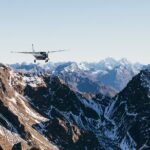
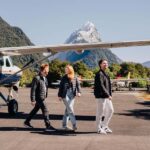
Then you swing toward Milford Sound, including scenic views along the way and flyovers of Mitre Peak. From the air, Milford Sound has that instant “how is this real?” effect—steep rock walls, narrow water corridors, and changing light as the helicopter tracks along the shoreline.
What makes this part worthwhile is angle variety. Even if you’ve seen Milford Sound from roads or viewpoints, the air gives you a wider perspective: you can see where the fjord compresses, where the cliffs break into side basins, and how the mountains shape the water’s path.
You also get a photo stop tied to the Milford Sound portion, with time built in to step into the best spot for pictures. My advice: don’t just shoot the water. Shoot the rock lines too. Those cliff textures are often what make your photos look like Fiordland and not just any fjord.
Earnslaw Burn Basin: The Only Permitted Landing
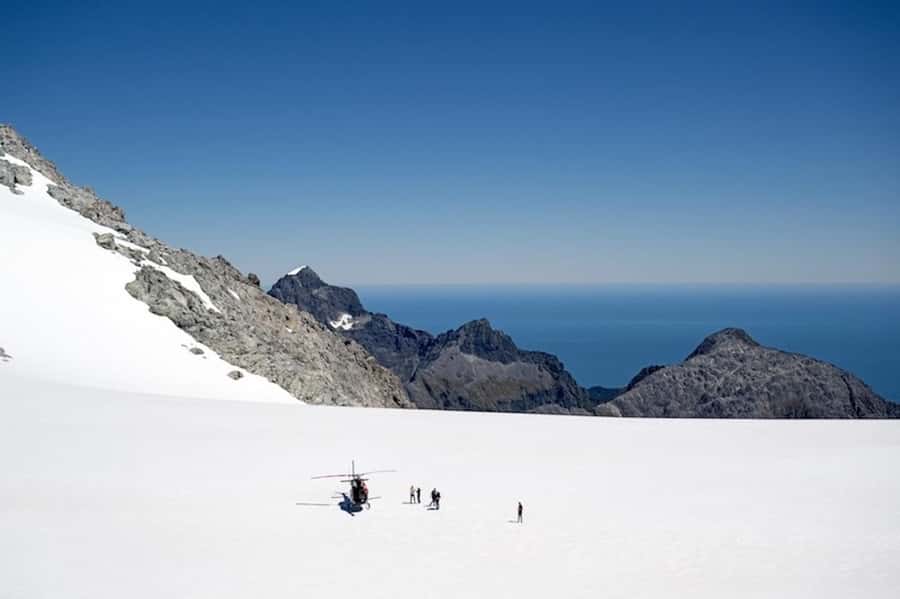
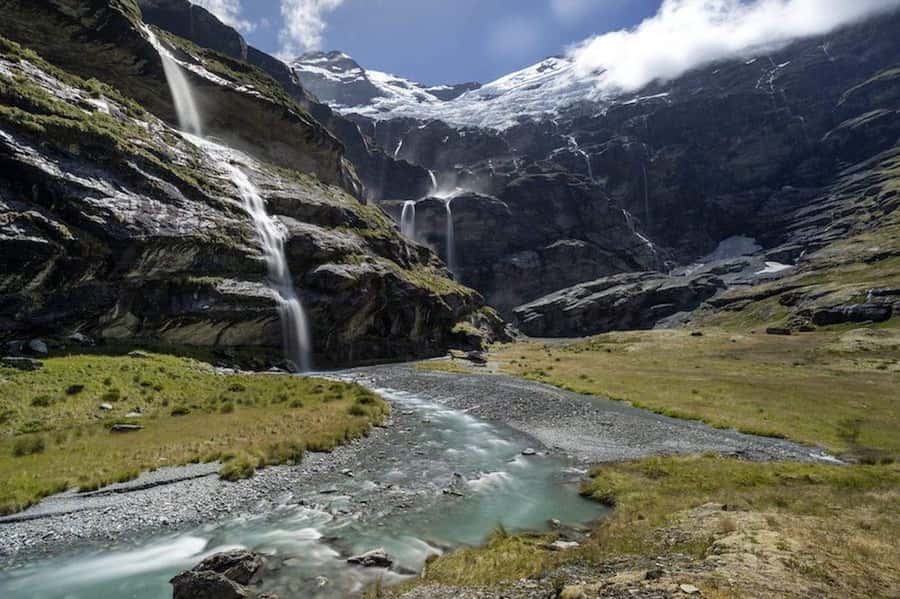
Now we get to the stop many people remember most: the Earnslaw Burn basin landing. This is highlighted as the only place where the operator is permitted to land, which matters because it’s tied to access. You’re not just visiting a scenic area—you’re stepping into a very specific, tightly regulated landing environment.
Surroundings here are the whole show. You can expect hanging glaciers and cascading waterfalls around the basin. On a good-weather day, the contrast between ice and moving water is striking, and the “in-your-face” proximity makes it feel more immediate than a lookout viewpoint.
Winter note: less waterfall, more snow coverage
In winter (June–August), the waterfalls at Earnslaw Burn may be less active, but the snow coverage and valley views remain stunning year-round. So even if the water output is reduced on the day you go, you’re still likely to get a dramatic white-and-rock scene that feels very Fiordland.
Think of winter as trading sound and volume of water for clarity of ice, snow fields, and strong mountain contrast. If you’re going in winter, that trade can actually be a win—especially if you’re a photographer or you love stark winter scenery.
The Small Details That Make a Big Difference
This flight is short enough that you’ll notice every small comfort decision. Here’s what will help you enjoy it instead of fuss:
- Bring warm clothing. Helicopter air can feel colder than you expect, and landings mean you’re outside longer than you think.
- Wear comfortable, closed-toe shoes. You’ll step onto landing surfaces, so traction matters.
- Bring your camera. Windows and glacial mist can create glare, so quick access matters.
- Expect English live inflight commentary. It helps you connect the terrain names—like Lake Quill and Sutherland Falls—to what you’re actually seeing.
- Don’t plan on choosing where you sit. Weight and balance decisions happen for safety, and that’s normal on helicopters.
One more practical point: because there are minimum passenger numbers needed to confirm a flight, your booking may depend on meeting that threshold. That’s not something to panic about, but it is part of how shared helicopter tourism works.
Price and Value: What $1,010 Buys You Here
At $1,010 per person for a 150-minute experience, this isn’t cheap. But when I look at value here, I’m not only counting time. I’m counting access.
You’re paying for:
- Multiple landing environments: alpine lake, glacier landing (weather permitting), and Earnslaw Burn basin.
- Major sightlines: Milford Sound and Mitre Peak flyovers plus big mountain viewpoints along the route.
- Guided context: inflight commentary in English helps you understand what you’re seeing rather than just looking at scenery.
- A time-saving format: one flight strings together several iconic areas without you moving your whole day on roads.
Food is not included, so plan to eat before or after. That’s a simple add-on, but it affects your total day planning. If you do eat out, you’ll want to factor that into your budget and your timing after you get back.
Is it worth it? If you want Fiordland’s highlights in one go—and you care about actually standing on a glacier basin rather than just watching from a viewpoint—this pricing starts to make sense. If you’re mostly interested in looking at water from a distance and you’re on a strict budget, you’ll probably feel the cost more than the payoff.
Who This Helihike (From the Air) Fits Best
This flight fits best if you:
- Want iconic Fiordland sights with minimal logistics stress.
- Prefer short, high-impact experiences over long, travel-heavy days.
- Love photography, especially when the light changes fast and you get multiple angles in a single session.
- Want access that’s difficult to recreate on foot or by road in the time you have.
If you’re someone who needs long, slow pacing or you hate weather uncertainty, you may find the tradeoffs annoying. But if you can roll with the day’s conditions—and trust the pilot’s safety calls—this format is exactly what makes Fiordland feel bigger than you expected.
Should You Book This Fiordland Helicopter Flight?
I’d book it if you’re set on seeing Milford Sound from the air and you want the rare experience of three landings, including the Earnslaw Burn basin stop. It’s the kind of outing where you can leave with photos you’ll remember and a strong sense of the scale of the place.
I wouldn’t book it if you’re easily disappointed by weather-related changes or if your budget needs to stay tight. In that case, you might prefer options that don’t depend as heavily on landing conditions.
If you do book, pack for cold, move quickly at photo stops, and treat the day like a mission: enjoy what you get, not what you hope for.
FAQ
How long is the helicopter flight from Queenstown?
The total duration is 150 minutes, and the tour runs as a 2.5-hour flight.
What landings are included on this experience?
This flight includes three landings: an alpine lake landing, a glacier landing (weather permitting), and a landing in the Earnslaw Burn basin.
Do they fly over Milford Sound and Mitre Peak?
Yes. You’ll have scenic flyovers of Milford Sound, including views of Mitre Peak.
How many people are onboard the helicopter?
It’s a shared experience with 6 to 9 passengers onboard.
Is hotel pickup included?
Hotel pickup and dropoff are optional.
Is food included?
No. Food is not included.