REVIEW · QUEENSTOWN
Queenstown: Sunrise Glacier Scenic Flight
Book on GetYourGuide →Operated by Glenorchy Air · Bookable on GetYourGuide
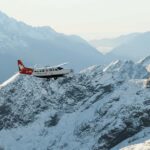
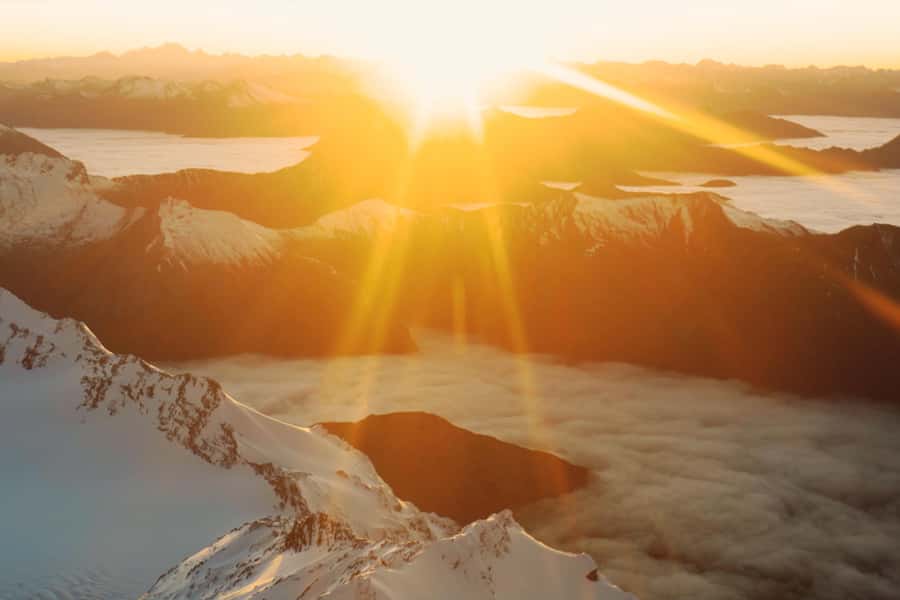
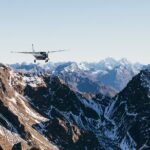
A sunrise flight sounds simple until you see where they fly at first light. This is New Zealand’s only fixed-wing Sunrise Scenic Flight, timed so you watch the sun break from behind Mt. Aspiring.
I like the way the experience is built around the moment—early departures, a clear view window, and a route designed for glacier scenes. I also like that you’re not stuck waiting around in a giant crowd since it’s limited to 9 people.
One drawback to consider: it’s a morning flight, so you’ll be trading sleep for views, and you can’t plan on landing stops because it’s a no-landing scenic flight.
In This Review
- Key takeaways before you book
- A fixed-wing sunrise flight from Queenstown’s first light
- What the 2-hour experience really feels like
- Sunbreak over Mt. Aspiring: Passchendaele Icefall and Bonar Glacier
- Over Mt. Aspiring National Park: Barrier Range and Arawhata River
- Window seat guarantee and small-group comfort at dawn
- Price and value: $298 for a 1h15 aerial circuit
- Who this sunrise glacier flight suits best
- Quick guide to making this flight work for you
- Should you book this Queenstown Sunrise Glacier flight?
- FAQ
- Where do I meet for the Sunrise Glacier Scenic Flight?
- How long is the total experience, and how long is the flight time?
- Is there landing at any point during the flight?
- Do I get a window seat?
- How big is the group?
- Will I have an English guide?
- Is there parking included or validated?
- Is there a conservation donation included in the price?
Key takeaways before you book
- New Zealand’s only fixed-wing sunrise flight: built specifically for that first sunbreak.
- Guaranteed window seat: you’re not competing for the view.
- 1 hour and 15 minutes in the air: a focused flight time for glaciers and ice features.
- Glacier route highlight list: Passchendaele Icefall, Bonar Glacier, and the Olivine Ice Plateau.
- National Park flying: Mt. Aspiring National Park plus the Barrier Range and head of the Arawhata River.
- Conservation add-on: $1 per passenger donated to the Kea Conservation Trust.
A fixed-wing sunrise flight from Queenstown’s first light
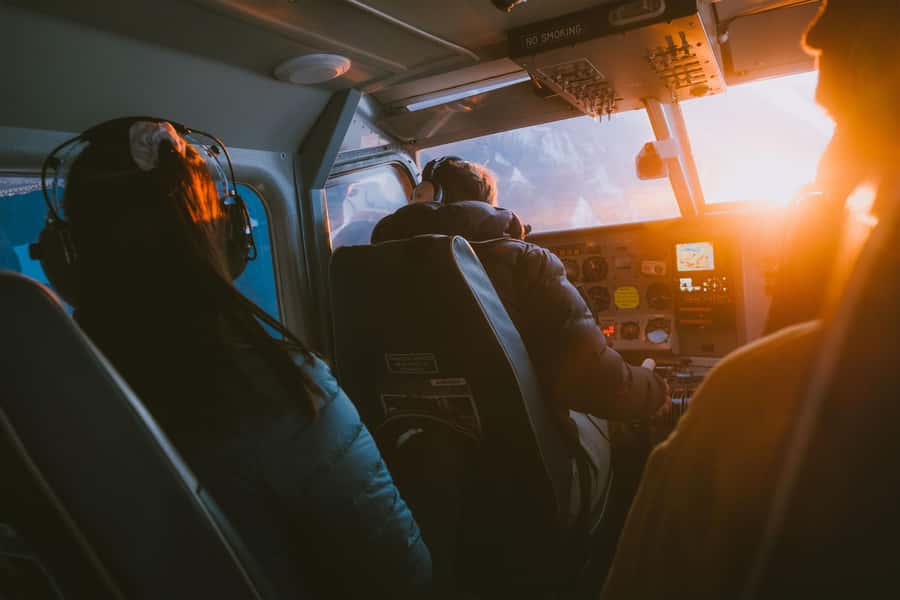
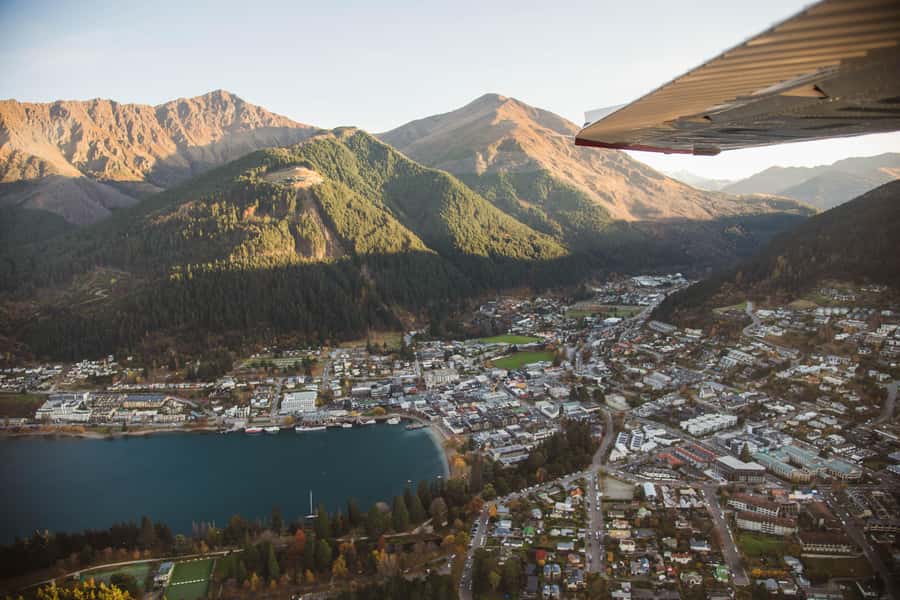
Queenstown at dawn is a different place. It’s quieter. Less rushed. And on this flight, that calm carries into the sky. The whole point is that you’re not just seeing glaciers—you’re seeing the day start, with the sun breaking from behind Mt. Aspiring, New Zealand’s highest mountain outside the Aoraki/Mount Cook region.
This is also a “how” experience, not just a “what.” A fixed-wing aircraft lets you cover a scenic circuit without the stop-and-start feel you can get from other types of sightseeing. You stay in one place long enough to look properly, and the timing helps you catch the light as it changes fast.
The pilot and team also seem to treat the planning like part of the product. One verified booking specifically called out excellent service, including planning and parking validation, which tells me they’re aiming to smooth out those first-friction moments that can kill early starts.
You can also read our reviews of more tours and experiences in Queenstown
What the 2-hour experience really feels like
The flight is listed as 2 hours total, but the time in the air is 1 hour and 15 minutes. That’s a sweet spot for sunrise viewing: long enough to get good light on the ice features, and not so long that you feel wiped out after.
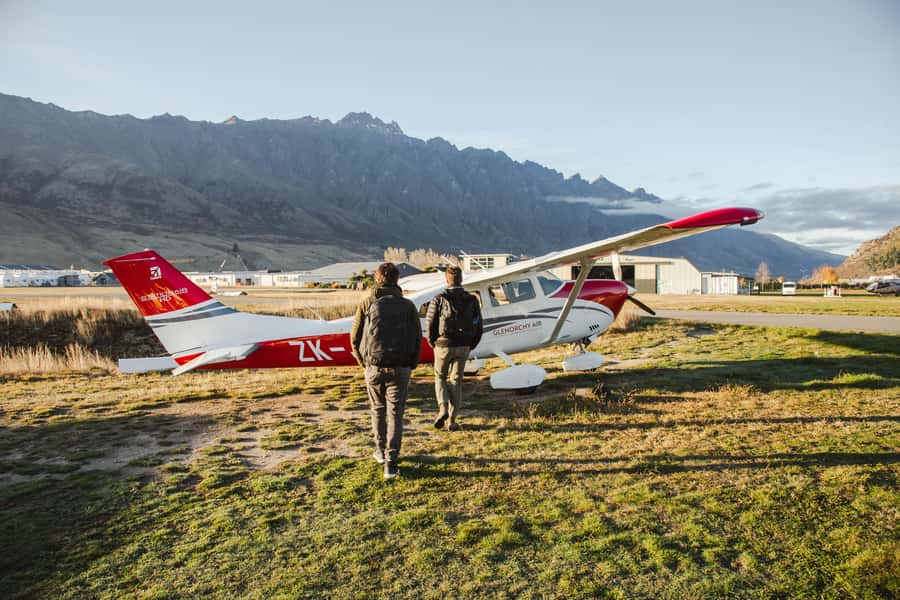
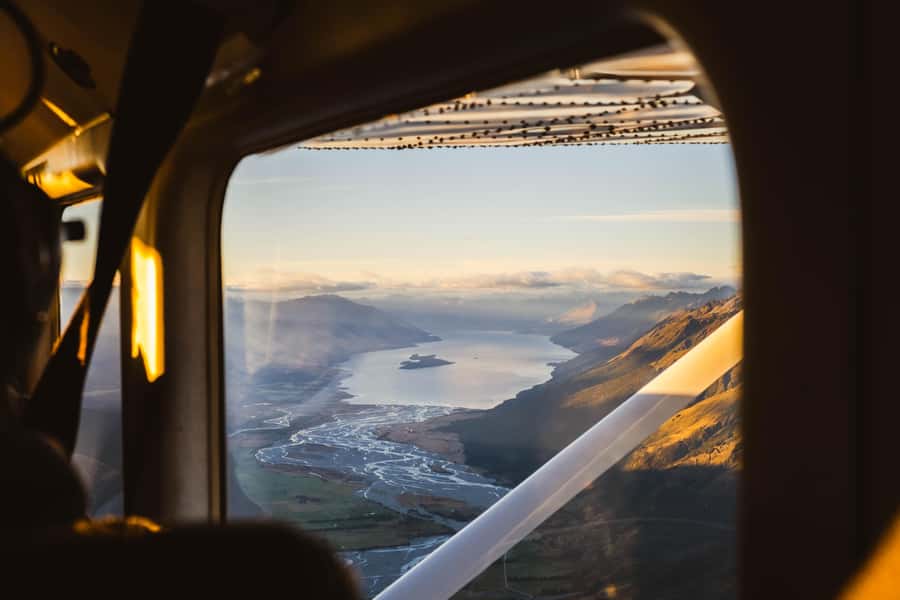
Here’s the on-the-ground reality you should expect. You meet at the main Queenstown Airport terminal inside the building at the Glenorchy Air kiosk. You’ll get settled, check in, and then board for a scenic flight that goes around Mt. Aspiring. The flight is round trip and specifically noted as no landing, so you’re basically thinking of this as a guided viewing loop from the air.
A small-group setup helps the experience feel tighter. It’s limited to 9 participants, and there’s a live English tour guide. In practice, that matters because you’re more likely to get clear explanations and quick course-corrections from the guide as the aircraft lines up with the view.
And yes, it’s English-speaking throughout, which makes the info easier to follow when you’re busy staring out the window like it’s your full-time job.
Sunbreak over Mt. Aspiring: Passchendaele Icefall and Bonar Glacier
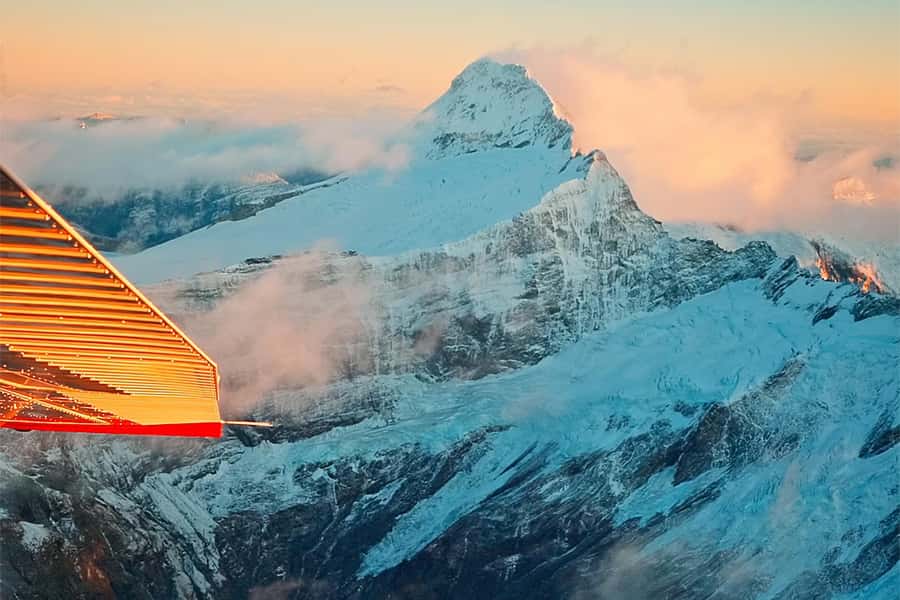
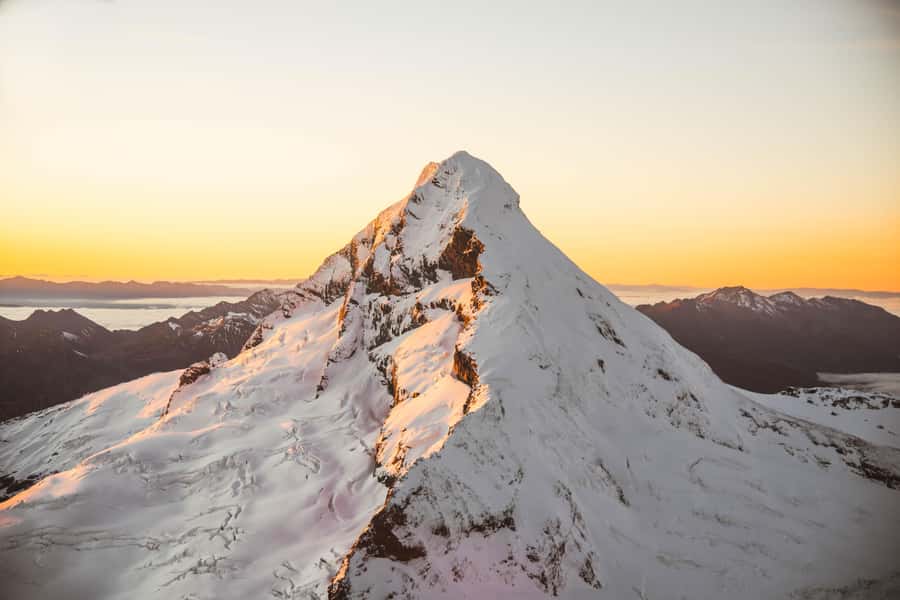
This is the headline moment: the sun break from behind Mt. Aspiring. They’re aiming for that first glow where the mountain shapes sharpen and the snow and ice features start popping with texture, not just brightness. If you’re the type who cares about lighting, this is where the value shows up.
The flight is designed to take in major ice scenery during that early light, including:
- Passchendaele Icefall
- Bonar Glacier
- Olivine Ice Plateau
You won’t land to “do” these places on foot. You’re viewing them from above, and that’s the point. From the air, glaciers stop looking like static photos and start looking like systems—flow, structure, and contrast. Even if you’ve seen glacier pictures before, the scale hits differently when you’re looking down and moving.
Also, the experience talks about traveling over places that still look as they did 15,000 years ago. I’d treat that as a poetic way of saying the ice formations are ancient and visually striking. Either way, you’ll feel the time scale when you’re watching the terrain slide past in that first-day light.
One practical tip: bring your patience for changing views. The best sightlines come when the aircraft is correctly positioned, and that’s always a moving target with sunrise. This flight is engineered for it, but you still want your camera ready and your posture comfortable for long stretches of looking.
Over Mt. Aspiring National Park: Barrier Range and Arawhata River
The scenic loop doesn’t stop at glaciers. You also fly over Mt. Aspiring National Park, including areas like the Barrier Range and the head of the Arawhata River.
This is where the flight becomes more than just ice photos. When you see the valleys and peaks around the ice, you get context for where the glaciers sit in the larger terrain. The Barrier Range and river head areas add a sense of how water and ice connect to the wider landscape.
It’s also a “hidden gems” type of route. The flight description specifically highlights those less-obvious viewpoints you’d struggle to find from the ground in time for sunrise. From the air, you get the kind of overview that turns a park name into a readable map.
And there’s an emotional layer here. Watching the start of a new day is quiet. Even with an explanation from the guide, the mood stays calm. That matters because you’ll remember how it felt, not only what you saw.
Window seat guarantee and small-group comfort at dawn
If you’ve ever been on a tour where the best seat is a lottery, this is built to avoid that. You get a guaranteed window seat, which is the difference between a scenic flight that’s worth it and one that turns into lots of blurred hallway memories.
Small group matters too. Limiting it to 9 participants keeps the cabin from turning into a noisy, constantly shifting mess—especially at first light when everyone is still half-asleep. It also makes it easier for the guide to speak clearly and for the pilot to manage the route without chaos.
Comfort is another angle. One verified booking notes the plane was comfortable and the pilot did a great job. That lines up with the overall design: a calm, controlled scenic experience where your attention stays on the views.
If you’re prone to motion discomfort, you’ll probably still want to go prepared like you would on any short scenic flight—just because it’s dawn doesn’t make physics go away. But there’s nothing in the provided info that suggests special gear needs. Focus on staying ready to look out the window for long stretches.
Price and value: $298 for a 1h15 aerial circuit
At $298 per person, this isn’t a budget activity. The key question is: what do you actually get for that money?
You’re paying for a combination that most scenic flights don’t bundle together:
- A sunrise-specific timing plan aimed at a sunbreak behind Mt. Aspiring
- A fixed-wing route that’s round-trip with no landing
- Guaranteed window seating
- 1 hour and 15 minutes of flight time focused on a glacier and national-park view arc
- A practical extra: parking validation at Queenstown Airport
- Plus, a conservation contribution: $1 per passenger to the Kea Conservation Trust
The value argument is strongest if you really want the light and the ice features in one shot. If your goal is simply to see mountains, you can do that from the ground in many ways. But if you want glacier structure and daybreak mood in one guided flight, this is the sort of “time and position” premium that makes sense.
Also, the company emphasizes that it’s New Zealand’s only fixed-wing Sunrise Scenic Flight. That uniqueness matters. You’re not just buying a route; you’re buying timing expertise.
Who this sunrise glacier flight suits best
This fits best if you match a few things:
- You love early mornings for a good reason, not because you have to.
- You want big visuals—peaks, valleys, and glacier features—without the hassle of driving to multiple viewpoints.
- You appreciate guided context while you look, especially for specific names like Passchendaele Icefall, Bonar Glacier, and Olivine Ice Plateau.
- You’d rather do one focused experience than piece together a full day of stops.
It also works well for couples or solo travelers who want an intimate group feel. With a max of 9 people and a guaranteed window seat, it’s set up so you’re not constantly negotiating where to stand or sit.
If you’re traveling with very young kids, or you hate the idea of a no-landing flight where you can’t “stretch legs,” this may be less your style. The info doesn’t mention child-specific guidance, so I’d treat it as a more adult, nature-focused sunrise activity.
Quick guide to making this flight work for you
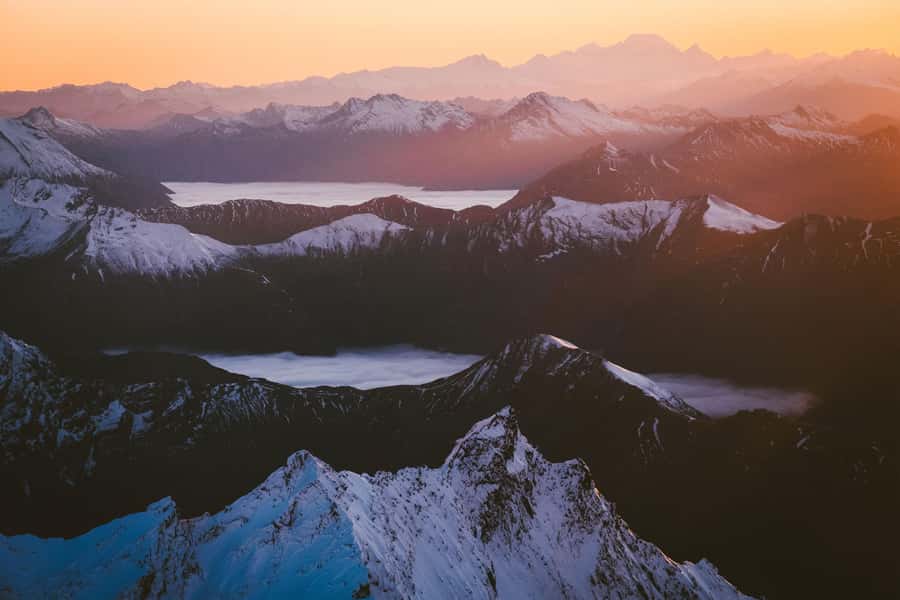
To get the most out of a sunrise flight, your biggest job is mental: show up ready to watch, not to rush. A few practical things to do:
- Wear layers. Sunrise is cool, and planes can feel chilly even when the ground looks mild.
- Bring a camera strap or something secure for easy window viewing.
- Keep your phone battery ready; you’ll want to shoot once the light hits.
On the viewing side, focus on two passes: your first look when the aircraft lines up for the sunbreak, then a second look as the guide calls out the glacier features. The names matter, because they help you connect what you see to the route—icefall to glacier to plateau, then out to valleys and river head terrain.
And because this is limited to 9 people with a live English guide, you’ll usually get the best experience by listening to the callouts. They’re there to turn scattered views into a coherent picture.
Should you book this Queenstown Sunrise Glacier flight?
Book it if you want the rare combo of sunrise timing + glacier viewing + guaranteed window access, all in a tight 2-hour package that starts with the first light in the Queenstown area.
Skip it if morning flights are a dealbreaker or if you’re looking for a tour with ground stops. This is a no-landing scenic circuit, so the value is in what you see from the air, not in changing locations.
If you’re on the fence, here’s the deciding question: do you want glacier scenery with daybreak light, or do you just want mountain scenery? If you want daybreak light, this is purpose-built.
FAQ
Where do I meet for the Sunrise Glacier Scenic Flight?
Meet inside the main Queenstown Airport Terminal building at the Glenorchy Air kiosk.
How long is the total experience, and how long is the flight time?
The duration is 2 hours total, including 1 hour and 15 minutes of flight time.
Is there landing at any point during the flight?
No. It’s a round trip scenic flight around Mt. Aspiring with no landing.
Do I get a window seat?
Yes. Your window seat is guaranteed.
How big is the group?
It’s a small group limited to 9 participants.
Will I have an English guide?
Yes. There is a live tour guide in English.
Is there parking included or validated?
Yes. There is parking validation at Queenstown Airport.
Is there a conservation donation included in the price?
Yes. There is a $1 donation per passenger to the Kea Conservation Trust.