REVIEW · QUEENSTOWN
Queenstown Sunrise Glacier Scenic Flight by Glenorchy Air
Book on Viator →Operated by Glenorchy Air Services and Tourist Co. Ltd · Bookable on Viator
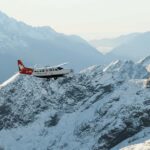
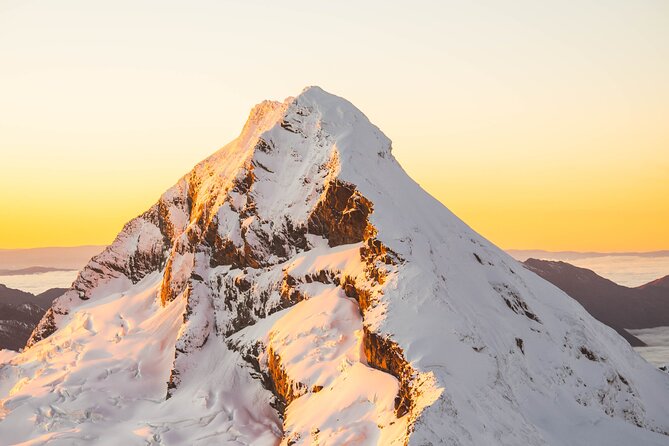
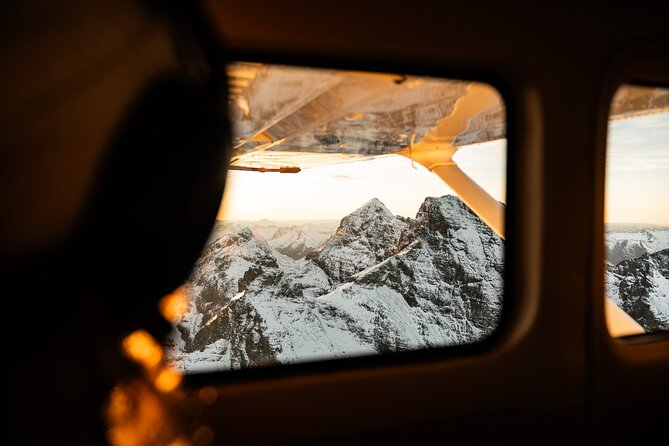
Sunrise over Mt. Aspiring is pure magic. This flight is built around one moment: watching the sunbreak appear from behind New Zealand’s highest peak outside the Aoraki/Mt. Cook region. From up in the air, you also get a strong read on the frozen scenery around the Passchendaele Icefall, Bonar Glacier, and Olivine Ice Plateau.
What I like most is how the timing and the route work together. You’re not just doing a scenic hop, you’re seeing frozen features that look like they belong to another era, plus flying above Mt. Aspiring National Park and over areas such as the Barrier Range and the head of the Arawhata River. The main drawback is simple: it depends on good weather, so your flight might get rescheduled if conditions aren’t right.
In This Review
- Key things to know before you fly
- Entering Glenorchy Air at Queenstown Airport (and keeping it easy)
- Watching the sunrise break from behind Mt. Aspiring
- Passchendaele Icefall, Bonar Glacier, and Olivine Ice Plateau from the air
- Mt. Aspiring National Park, the Barrier Range, and the Arawhata River head
- The pilot and in-flight guidance: why it affects your photos
- Price and value: what $303.46 gets you (and what it doesn’t)
- Booking timing and what to do if weather threatens the plan
- So, should you book it?
- FAQ
- Where is the meeting point for the Queenstown Sunrise Glacier Scenic Flight?
- How long is the flight?
- How much does it cost per person?
- What is the maximum group size?
- Is it a mobile ticket?
- What scenery will you see during the flight?
- What happens if the flight can’t operate due to weather?
- When can I cancel for a full refund?
- Is this experience suitable for most people?
Key things to know before you fly
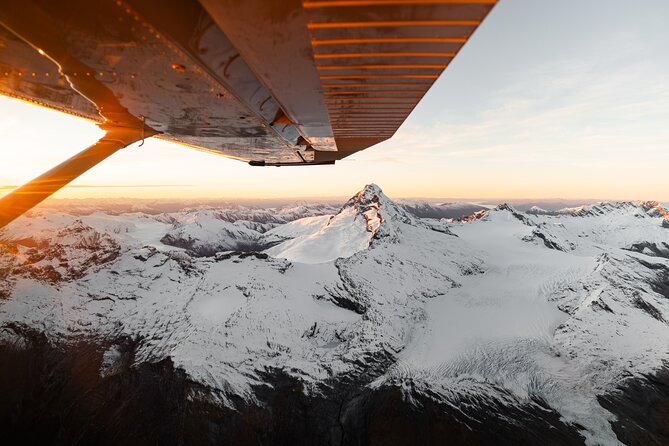
- Sunbreak planning: The route is set to help you catch the light breaking from behind Mt. Aspiring.
- Glacier highlights in one flight: You’ll look down on Passchendaele Icefall, Bonar Glacier, and the Olivine Ice Plateau.
- National park viewpoints from above: The flight passes over Mt. Aspiring National Park with big views of the Barrier Range and the Arawhata River head.
- Small group size: Maximum of 12 people, which tends to feel more personal than crowded flights.
- Short and focused: About 2 hours total time, so you’re getting a concentrated sunrise experience rather than a long day out.
Entering Glenorchy Air at Queenstown Airport (and keeping it easy)
This starts and ends at Glenorchy Air at Queenstown Airport, inside the terminal building on Sir Henry Wigley Drive in Frankton. If you’re already in Queenstown, this is one of the more straightforward scenic options because you’re not dealing with long transfers or remote departure points.
You’ll use a mobile ticket, and you should plan to arrive with enough time to check in without rushing. The day is built around sunrise viewing, so the little things matter. In practice, arriving promptly helps everything flow, especially with a small group cap of 12.
Because the activity ends back at the meeting point, you don’t have to plan a second leg of getting home. That makes the whole experience easier to slot into a tight Queenstown schedule.
You can also read our reviews of more tours and experiences in Queenstown
Watching the sunrise break from behind Mt. Aspiring
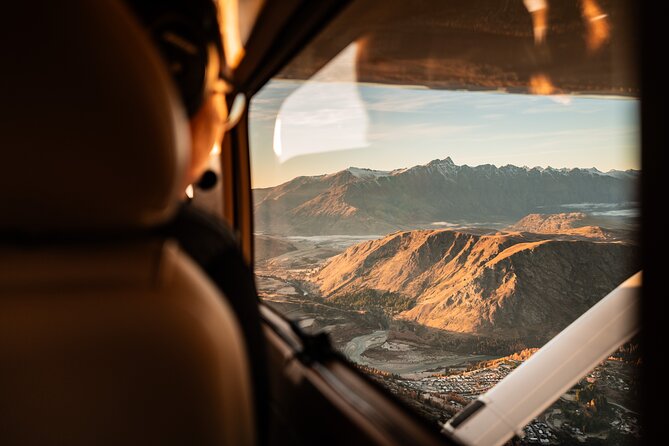
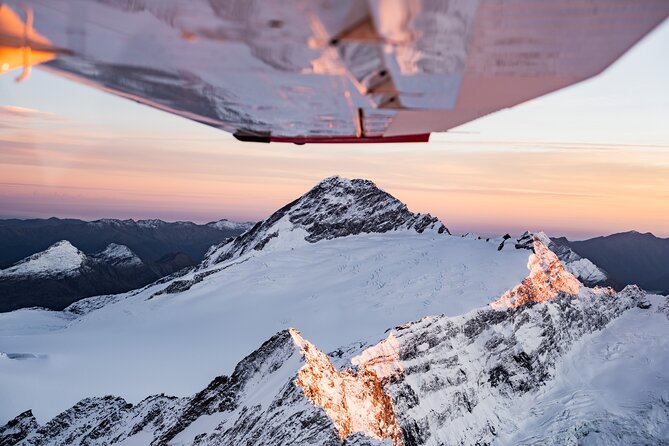
The whole point of this flight is the moment the sun appears. The route is designed so you can watch the sunbreak from behind Mt. Aspiring—New Zealand’s highest mountain outside the Mt. Cook/Aoraki region.
Why that matters: sunrise is more than pretty light. It changes contrast on snow and ice, and it affects how clearly you can see texture—creases, flow patterns, and the edges where glaciers meet rock. In other words, the sky isn’t just background here. It’s part of the “how you see the scenery.”
This also contributes to the calm mood people chase in Queenstown. You’re in the air early enough that the world feels quiet, and you’re watching the start of a new day unfold from a vantage point that’s hard to replicate any other way. If you’ve done hikes where the early start is rough, this is a gentler way to get sunrise without the physical grind.
Passchendaele Icefall, Bonar Glacier, and Olivine Ice Plateau from the air
Here’s where the flight earns its name: you’re not only passing over mountains, you’re looking at glacier features. The scenery includes the Passchendaele Icefall, the Bonar Glacier, and the Olivine Ice Plateau—three icy landmarks that look dramatically different as the light grows stronger.
Aerial viewing is the advantage. From the ground, glaciers are often partly blocked by angle, distance, and weather. From a fixed-wing aircraft, you get a broader “map view,” which helps you understand how these features connect. It’s the kind of perspective that turns a word like icefall into something visual and immediate.
The flight also leans into the sense of scale and time. You’ll fly over places that are described as frozen in time, still looking as they did around 15,000 years ago. Even if you don’t treat that as a science lecture, it gives you a useful mental picture: you’re looking at terrain shaped by long processes, not just a quick seasonal snow scene.
One practical note: with only an approximate 2-hour duration, you’ll want to stay mentally present. This isn’t a flight where you can wander in and out of the moment. The best views come when you’re ready to look as the aircraft lines up.
Mt. Aspiring National Park, the Barrier Range, and the Arawhata River head
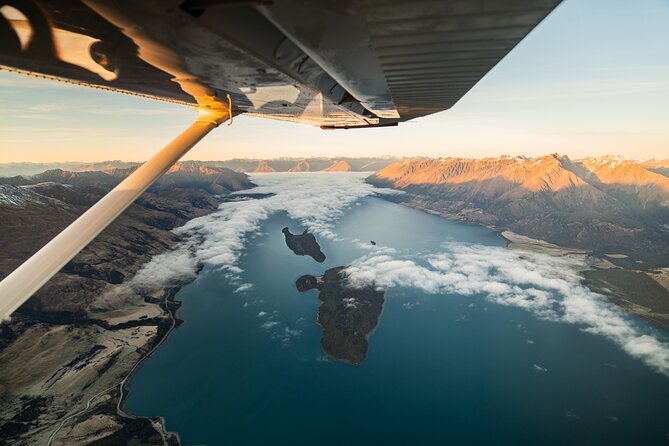
Another strong value here is variety within one scenic loop. You’ll fly above Mt. Aspiring National Park, and the description calls out specific areas such as the Barrier Range and the head of the Arawhata River.
That’s helpful because it keeps the flight from turning into only ice, only rock, or only peaks. You get a broader “systems view”: the glaciers sit above and among rugged terrain, and the drainage lines hint at where water eventually runs. It makes the mountains feel connected, not random.
It’s also the kind of scenery that works whether you’re a geology nerd or you just love big views. Seeing the river head from the air gives you a sense of direction and scale that can be hard to grasp from lookouts.
The pilot and in-flight guidance: why it affects your photos
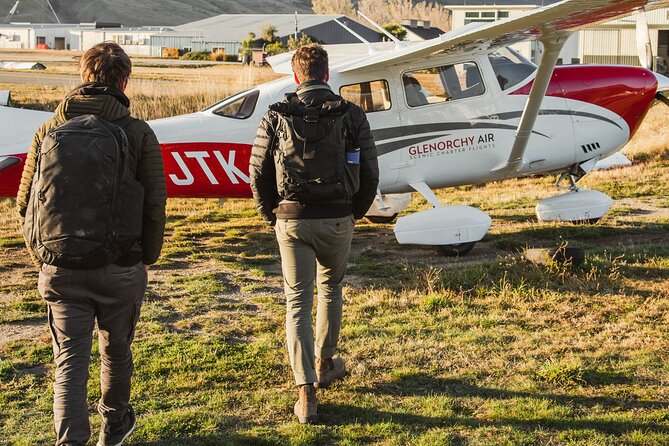
In a sunrise flight, the camera is only half the story. The other half is getting the aircraft lined up at the moment you want, and knowing what you’re actually looking at while the light shifts.
The experience is repeatedly described as well run, with staff providing clear instructions and helping people choose an experience that fits. On the air side, pilots are praised for being professional and for knowing what’s worth pointing out. Names that come up include Joseph and Will, and the common thread is confident flying plus explanation that helps you see the scenery rather than just pass over it.
If you care about photos and videos, this matters. You’ll get better results when you’re not guessing where to aim your lens. Sunrise also creates fast-changing highlights, so having a pilot who can keep everyone oriented is a real quality-of-life improvement.
Price and value: what $303.46 gets you (and what it doesn’t)
At $303.46 per person, this isn’t a budget add-on. But it also isn’t a long, multi-part expedition. It’s priced like a premium, time-sensitive experience—because sunrise isn’t something you can replicate on demand.
Where the value lands:
- You’re buying the timing. The sunbreak isn’t a bonus feature; it’s the design.
- You get multiple named ice landmarks in one flight, rather than a single quick viewpoint.
- Small group size (max 12) makes it easier to feel less processed and more focused on what’s outside the windows.
- You’re getting a fixed-wing perspective over Mt. Aspiring National Park, with specific named areas like the Barrier Range and Arawhata River head.
Where value might not fit:
- If you want a long nature day with walking and stopping, this is still a short flight. It’s about seeing, not hiking.
- If you’re highly weather-dependent in your schedule, keep flexibility in mind. This experience requires good weather, and if it’s canceled for weather reasons you should expect a different date or a full refund.
Booking timing and what to do if weather threatens the plan
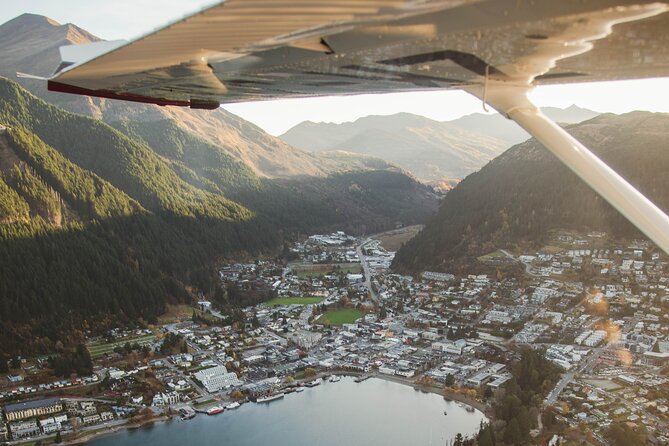
On average, this is booked about 34 days in advance. That tells me two things. First, sunrise flights are popular in Queenstown. Second, if you want a specific date, you shouldn’t treat it like a last-minute option.
Weather is the swing factor. The experience requires good weather, and if conditions don’t cooperate, you’ll be offered either another date or a full refund. There’s also a minimum number of travelers required to run the flight, so very low-demand dates can shift too.
My practical approach: book what you want, but keep your broader Queenstown plan adjustable around this sunrise slot. Early flights can feel like a gamble until you’ve lived through how quickly conditions change in the Southern Alps region.
So, should you book it?
I’d book this if you want a high-impact sunrise experience with glacier views that you can’t get from a casual lookout. It’s a strong choice for people who love mountain scenery, prefer seeing big geography from above, and like the idea of starting the day in a calm, clear way.
I’d pass or swap it if you dislike early mornings or you’re the type who can’t handle possible changes due to weather. This is short, focused, and weather-driven—so it rewards flexibility and punishes rigid plans.
If you’re on the fence, this is one of those Queenstown options where the payoff is immediate: you’re not waiting days for the “perfect” viewpoint. The flight is designed to put you in position at the moment the landscape wakes up.
FAQ
Where is the meeting point for the Queenstown Sunrise Glacier Scenic Flight?
It meets at Glenorchy Air Queenstown Airport, Terminal Building, Sir Henry Wigley Drive, Frankton, Queenstown 9300, New Zealand.
How long is the flight?
The duration is approximately 2 hours.
How much does it cost per person?
The price is listed as $303.46 per person.
What is the maximum group size?
The maximum is 12 travelers.
Is it a mobile ticket?
Yes, the tour includes a mobile ticket.
What scenery will you see during the flight?
You’ll fly by Mt. Aspiring at sunrise and see areas described as the Passchendaele Icefall, Bonar Glacier, and the Olivine Ice Plateau, plus views over Mt. Aspiring National Park including the Barrier Range and the head of the Arawhata River.
What happens if the flight can’t operate due to weather?
If it’s canceled because of poor weather, you’ll be offered a different date or a full refund.
When can I cancel for a full refund?
Free cancellation is available up to 24 hours in advance of the experience start time for a full refund.
Is this experience suitable for most people?
Most people can participate. Confirmation is received at the time of booking.