REVIEW · QUEENSTOWN
Queenstown to Dunedin with Taieri Gorge Train One-Way Tour
Book on Viator →Operated by Cheeky Kiwi Travel · Bookable on Viator
A rail journey is the best kind of long day. This one links Queenstown to Dunedin with guided stops in Central Otago, then hands you over to the Taieri Gorge Train for the main event. You’ll travel through gold-fever country, photo stops, and an old-school ghost town before the tracks start doing the talking.
I really like two things about this trip: first, the mix of road sights plus the 2-hour train ride, so you get more than just a straight transfer. Second, the day includes time at Dunstan House in Clyde for a proper morning break (food is on you, but the stop is part of the tour). On top of that, the guide on the road has real stories—our driver-guide Colin was quick with answers and set the scene for what you’re seeing.
One caution: this is an early start (pickup begins around 6:30am) and you should be ready for a moderate amount of walking. If you have mobility limits that are more than just a little inconvenient, you’ll want to think carefully before booking.
In This Review
- Key things to love about the Queenstown to Dunedin Taieri Gorge Train tour
- The big idea: it’s a scenic transfer with a headline train ride
- Queenstown pickup, then east: why the road portion matters
- Lake Dunstan and Cromwell: your first real “this is Central Otago” moment
- Stop at Dunstan House and Café Clyde: history you can actually sit with
- Ophir Bridge Road photo stop: quick, easy, and worth it
- St Bathans and the Blue Lake: the ghost-town stop that adds contrast
- Pukerangi: the handover moment before the train
- Taieri Gorge Railway: the 2-hour rail ride that ties it all together
- Arriving in Dunedin: Edwardian station drop-off and city access
- Price and value: what $179.97 buys you in one day
- Who this tour fits best (and who should consider alternatives)
- Quick planning tips so the day feels easy
- Should you book it? My honest call
- FAQ
- What time does the Queenstown pickup start?
- How long is the tour from Queenstown to Dunedin?
- What train ride is included?
- Is morning tea included, and where?
- Is lunch included in the tour?
- What’s the luggage and group limit?
Key things to love about the Queenstown to Dunedin Taieri Gorge Train tour
- Early morning start that pays off with a full day of sights plus a scheduled train segment
- Dunstan House and Café Clyde for a historic morning tea stop along the way
- St Bathans and Blue Lake for a striking gold-rush ghost town stop and mining-shaped scenery
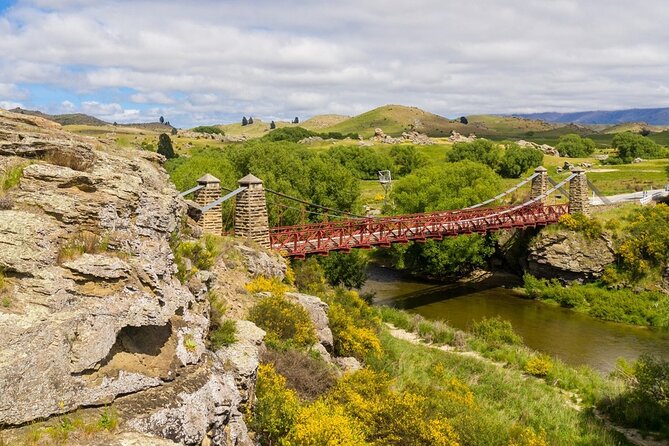
- Ophir Bridge Road for easy photo time at an 1880 suspension bridge
- Taieri Gorge Train from Pukerangi to Dunedin with viaducts and hand-carved tunnels
- Small group size (max 15) and a road trip done in Mercedes-Benz comfort
The big idea: it’s a scenic transfer with a headline train ride
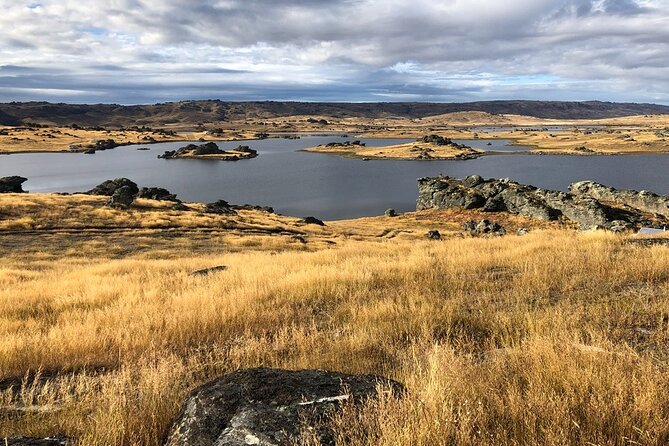
This isn’t just a bus ride from Queenstown to Dunedin. The day is built like a “best of Central Otago” drive, with a famous rail line as the finale. You’ll start in Queenstown with pickup, ride east through gold-rush country, stop for photo moments and breaks, then board the Taieri Gorge Train at Pukerangi and ride into Dunedin.
The value here comes from stacking included time. You’re not paying only for transportation—you’re paying for guided road segments, scheduled stops, and the train ticket itself. At $179.97 per person, it makes most sense if you want one organized day that does the heavy lifting of timing and routing for you.
The timing also matters. Starting at 6:30am means you’ll beat the day’s crowds and still arrive in Dunedin with time to enjoy the city afterward.
You can also read our reviews of more tours and experiences in Queenstown.


Queenstown pickup, then east: why the road portion matters
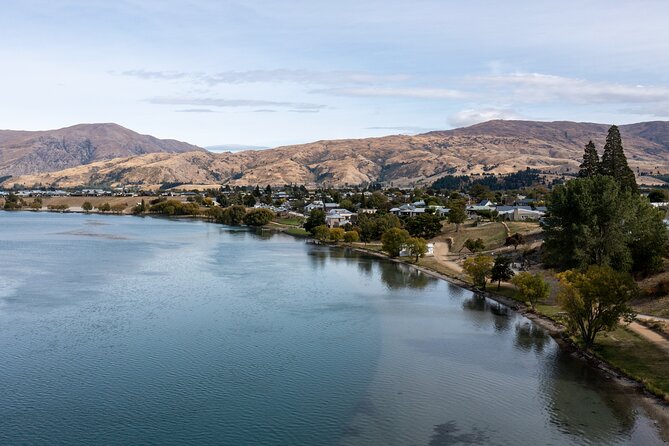
Your day begins with a pickup in Queenstown at a select location. Then you head east in a Mercedes-Benz—a small detail, but it’s a real comfort upgrade for a long day. You’re traveling with luggage allowance too: space for one large and one small bag per person, which is helpful if you’re doing this as part of a multi-stop trip.
The route takes you through a mix of dramatic places and classic Central Otago stops. You’ll pass the Gibbston wine region and the Kawarau Gorge, and you’ll follow gold rush trails through towns tied to early pioneers and mining. Even if you’re not a history buff, the drive gives you context for the rail ride. The Taieri Gorge story doesn’t come out of nowhere—you’re building the backstory on the road.
A practical note: the tour is designed for people with moderate walking needs. Stops are short, but you’ll still be on your feet at viewpoints and town areas.
Lake Dunstan and Cromwell: your first real “this is Central Otago” moment
After leaving the early route behind, you’ll move alongside Lake Dunstan and stop near Cromwell. This is gold mining country—Cromwell sits where the Clutha and Kawarau rivers meet, and that setting helps explain why the region developed the way it did.
Even the way the stop is described is useful for planning. You’re not just passing by water and mountains—you’re using the pause to connect geography with the gold-rush era. If you like travel that gives you a reason for every turn of the wheel, this part works.
How long you’ll spend here isn’t listed as a separate timed stop in the breakdown, but the schedule is clearly built around a sequence of photo and walking moments. You’ll want a light sense of readiness: comfy shoes, water, and a layer for early morning air.
Stop at Dunstan House and Café Clyde: history you can actually sit with
One of the most pleasant parts of the itinerary is the Dunstan House stop in Clyde. You get a morning break there with time for tea—likely the kind of pause that keeps a long day from feeling like a sprint.
Dunstan House is a restored 1898 hotel. That matters because this isn’t a modern roadside café with a historic photo on the wall. You’re in a building tied to the era when gold prospectors and travelers used the route.
The tour includes the stop, and admission is free. Food, as expected, is available for purchase, so you can choose something simple that won’t slow you down. I like this stop because it gives you a chance to reset before the ghost-town segment and before the real centerpiece: the train ride.
If you’re the type who needs coffee right away, aim to use this stop early. It’s easy to get to it, you’re in a good setting for a break, and you won’t lose momentum.
Ophir Bridge Road photo stop: quick, easy, and worth it
Next up is Ophir Bridge Road, where you can pause for photos at an 1880 suspension bridge over the Manuherikia River.
This is one of those “short stop, good payoff” moments. Five minutes doesn’t sound like much, but if you’re traveling in a small-group format, a timed photo break keeps everything on track. And a bridge like this is one of the easiest ways to get a sense of the region’s engineering past without a long detour.
Bring your camera or phone—yes, even if you think you’ll take photos later. The light on river corridors can change fast.




St Bathans and the Blue Lake: the ghost-town stop that adds contrast
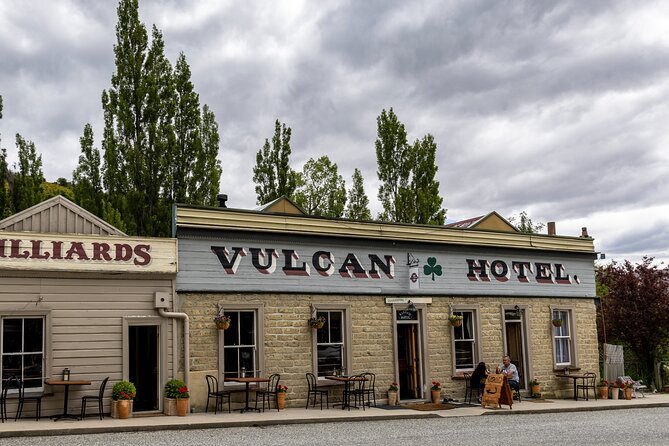
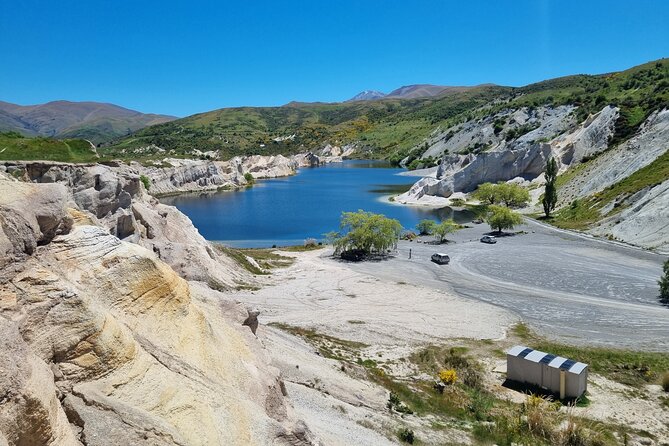
Then you reach St Bathans, a place that’s described as an atmospheric ghost town where gold once ruled. This stop gives you contrast after the bridges and rivers: you’re moving from “scenic and historic” into “quiet and eerie,” with the added wow-factor of the Blue Lake of St Bathans.
The Blue Lake is a mining-shaped result, formed from mining activity. That detail matters because it gives the view meaning beyond aesthetics. You’re seeing how extraction shaped the land—and now it’s part of the landscape you’re standing in.
You’ll have about 30 minutes here. That’s enough time to walk around at a comfortable pace, take photos, and read the feel of the town without feeling rushed. Just keep expectations realistic: this is a short visit, not a full exploration of every building.
Pukerangi: the handover moment before the train
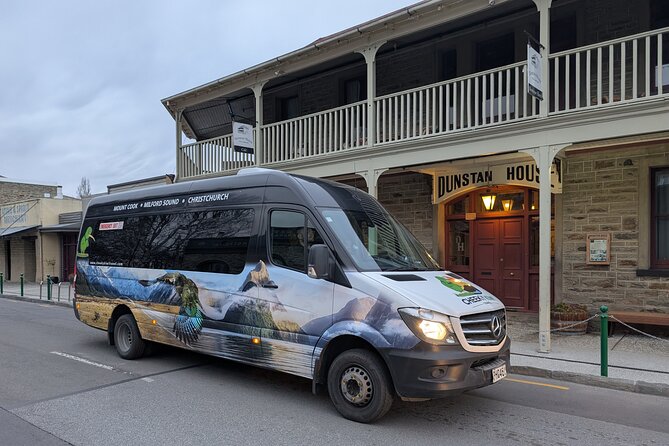
At Pukerangi, you’ll arrive at the remote station area and then board the Taieri Gorge Train. This is the handoff point where the guided road day becomes the train day.
The schedule notes you’ll have a short buffer—around 10 minutes—before you’re on the train. It’s a good idea to use that moment for anything you forgot: snacks, water, charging your phone, and a final gear check so you’re ready to settle in.
Also, you’ll want to plan for what’s next: once you’re seated, your focus shifts to windows, tunnels, viaducts, and the slow reveal of gorge views.
Taieri Gorge Railway: the 2-hour rail ride that ties it all together
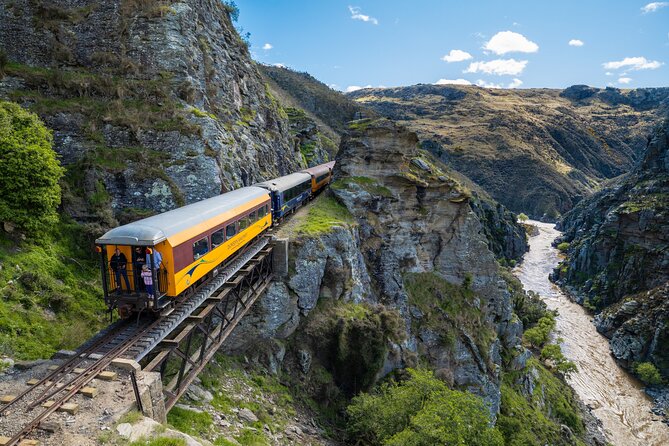
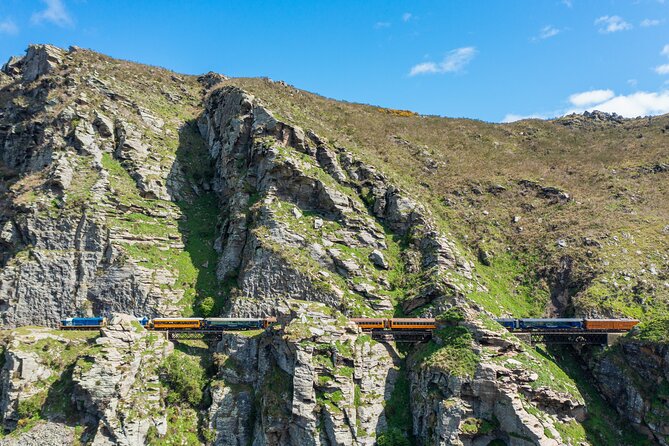
This is the headline portion: 2 hours aboard the Taieri Gorge Railway, with your ticket included. The route is known for panoramic views through deep ravines, with viaducts and hand-carved tunnels along the way.
Even if you’ve ridden other scenic trains, this one has a specific feel because it’s carved into the terrain rather than simply skimming around it. You’ll feel the dramatic geometry of the gorge as the train moves through. You’ll cross towering structures and pass through tunnels carved from the rock—exactly the kind of details that make a train ride feel like more than just transport.
The best part is that the scenery arrives in moments. Instead of constantly looking for the next photo, you can relax and let the route unfold. Windows become your “schedule,” and the train sets the pace.
If you hate being stuck without a plan, this helps: you always know something is coming—a tunnel, a viaduct, a bend—so there’s something to watch every few minutes.
Arriving in Dunedin: Edwardian station drop-off and city access
Your journey ends at Dunedin Railway Station, described as an ornate Edwardian station. You only need about 5 minutes here on the tour schedule—this is a drop-off rather than a guided city walk.
So what you should do is simple: step off, take a quick look at the station architecture, then head into Dunedin on your own. The tour doesn’t include hotel drop-off, so plan your onward transport ahead of time.
This is also why the tour length matters. You’re traveling about 10 hours total. If you’re arriving in Dunedin for the day or for one more night, you’ll still have enough energy to get oriented and enjoy the city after the train.
Price and value: what $179.97 buys you in one day
At $179.97 per person, you’re paying for a full itinerary package, not just a ticket.
Here’s where the value comes from, based on what’s included:
- Hotel pickup in Queenstown (select locations only)
- A fully guided road journey from Queenstown to Pukerangi
- Morning tea stop at Dunstan House (food purchase optional)
- Taieri Gorge Train ticket from Pukerangi to Dunedin
- Luggage space for one large and one small bag per person
What’s not included is also important: no lunch, and no hotel drop-off in Dunedin. That means you’ll likely need to plan your meals and transport around your own schedule.
For value, this works best if you would otherwise have to juggle multiple tickets, figure out timing for stops, and coordinate transport across long distances. If you prefer a relaxed “one booked day does it all” approach, this is a solid choice.
Who this tour fits best (and who should consider alternatives)
This tour is a great match if you want:
- A guided, low-stress way to connect Queenstown and Dunedin
- A train experience that feels like a major attraction, not a short ride
- Photo breaks that are timed so you’re not running ahead of the group
- Central Otago stops that feel varied: wine region drive, Clyde, bridge views, St Bathans, then rail through gorge terrain
It may be less ideal if you:
- Have severe mobility difficulties, since it’s not recommended for that
- Dislike early mornings (6:30am start)
- Need a very long food break (lunch is not included)
Quick planning tips so the day feels easy
Pack light layers for the early start, since it can feel cooler before the sun gets going. Wear shoes that work on uneven surfaces—ghost-town areas and station platforms are not always smooth.
Also, don’t underestimate the mental rhythm shift. In the morning, you’re on a schedule of stops and road time. After boarding the train, you’ll want to slow down and let the route play out without rushing to every window moment.
Finally, if you care about photos, plan to use the bridge and St Bathans time intentionally. The schedule gives you short windows, so arrive ready to shoot rather than deciding what to photograph after you’ve already stepped off the bus.
Should you book it? My honest call
Book it if you want one efficient day that combines Central Otago scenery and story stops with a genuine headline ride on the Taieri Gorge Train. I like how the day is sequenced: you’re grounded in the region’s gold-rush setting before the train starts crossing viaducts and going through tunnels.
Skip or compare options if early mornings and moderate walking sound stressful, or if you’d rather build the route on your own with total freedom. Also, since lunch isn’t included and Dunedin drop-off is at the station (not your hotel), plan that part ahead.
If your priority is a memorable rail experience and you don’t want to manage logistics across multiple legs, this one-day Queenstown-to-Dunedin plan is a strong bet.
FAQ
What time does the Queenstown pickup start?
The start time is 6:30am, with pickup in Queenstown at select locations.
How long is the tour from Queenstown to Dunedin?
The duration is about 10 hours.
What train ride is included?
Your included train ticket is for Taieri Gorge Train from Pukerangi to Dunedin.
Is morning tea included, and where?
Morning tea is included as a stop at Dunstan House in Clyde. Food is available for purchase.
Is lunch included in the tour?
No, lunch is not included.
What’s the luggage and group limit?
There’s space for 1 large and 1 small bag per person. The tour has a maximum of 15 travelers.